
Aaron Pfau: 2026 National Apprentice of the Year

Celebrating Aaron Pfau: 2026 National Apprentice of the Year Talent Together is proud to celebrate Apprentice Teacher Candidate Aaron Pfau of East Lansing Public Schools for receiving the 2026 National Apprentice of the Year Award at the Apprenticeships for America National Summit in Washington, D.C. Aaron was recognized on the main stage in front of more than 1,000 attendees after being nominated by Talent Together for this national honor. Aaron Pfau receiving his award at the AFA Summit Aaron is currently completing his Registered Apprenticeship Program through East Lansing Public Schools while pursuing a Master of Arts in Education at Northern Michigan University. Following Aaron’s apprenticeship, he will be a Michigan-certified special education teacher with an endorsement in learning disabilities. The Apprenticeships for America award recognizes apprentices who demonstrate the power of Registered Apprenticeship Programs to improve participant outcomes while supporting employers, schools, and communities. Award recipients are selected based on their professional growth, perseverance, partnership-building, and advocacy for apprenticeship opportunities. Aaron’s journey into education reflects both dedication and resilience. Before joining Talent Together, he built an educational background in criminal justice and spent more than four years working directly with students with special needs. He also volunteered with a local non-profit, End Violent Encounters (EVE), by supporting survivors of domestic violence and sexual assault. Aaron began his career in education as a paraprofessional with Okemos Public Schools in an Autism Spectrum Disorder sixth-grade classroom, supporting students in mathematics, social skills, and writing development. In December 2019, Aaron transitioned to East Lansing Public Schools, where he served as a full-time paraprofessional in an early childhood Autism Spectrum Disorder classroom, assisting young learners with special needs. During the 2020–2021 school year, he also worked full-time with sixth-grade students experiencing behavioral challenges, helping support social skill development and implementation of Individualized Education Programs. Although Aaron faced challenges securing a placement and started his Registered Apprenticeship Program later than expected, he quickly exceeded expectations. He rapidly caught up on U.S. Department of Labor apprenticeship program standards and classroom responsibilities while consistently demonstrating professionalism, determination, and a strong commitment to growth. Aaron’s mentor teacher, Patti Sanchawala, noted that Aaron actively seeks feedback and continuously strives to improve as an educator. He consistently demonstrates empathy and self-reflection, which are critical skills when working collaboratively with students, families, and colleagues, especially when presented with challenges. His nomination highlighted excellence in four key areas: Performance: Demonstrated exceptional professional growth and development through technical training and on-the-job learning. Journey: Overcame adversity and leveraged the Registered Apprenticeship Program to enter a profession that may not otherwise have been accessible. Partnership: Built meaningful relationships with mentors, instructors, and school partners to enhance his apprenticeship experience. Advocacy: Actively supports Registered Apprenticeship Programs by sharing information, encouraging others to pursue apprenticeship opportunities, and supporting fellow apprentices throughout their journeys. Aaron’s passion for supporting students with special needs and his commitment to becoming an exceptional educator continue to make a meaningful impact on the students, families, and colleagues he serves every day. Congratulations, Aaron, on this well-deserved national recognition. Talent Together is honored to support your journey and celebrate this incredible achievement.
Michigan Pipeline Turns Classroom Paraprofessionals Into Teachers.

Michigan Pipeline Turns Classroom Paraprofessionals Into Teachers The 74 Million: By Martin Slagter With tuition assistance and a paid apprenticeship, the state initiative allows classroom aides to join the teaching ranks in their own communities. Seven years ago, Donille Cabanaw could not shake the feeling she needed to pivot from the 12 hour days she was working for the U.S. Postal Service when it began to interfere with her daughter starting school. Becoming a paraprofessional at Dexter Community Schools helped her achieve a more flexible schedule and better work-like balance; then she began working toward a bachelor’s degree in education. That’s when an intriguing opportunity to level up and become a classroom teacher presented itself through Michigan’s Talent Together initiative. Created to address Michigan’s educator shortage by removing barriers toward teacher certification, Talent Together helped Cabanaw earn her bachelor’s degree in less than two years. The state-funded initiative covered Cabanaw’s tuition to take virtual classes at Lake Superior State University while paying 80% of a starting teacher’s salary during her year-long apprenticeship alongside an experienced teacher she shared a classroom with at Wylie Elementary. Now with a fourth grade classroom of her own students, Cabanaw said Talent Together was the break she needed: removing the financial barrier to a teacher certification while helping her gain a year’s worth of classroom experience. “Having that job and being a parent and being a wife was not sustainable,” Cabanaw recalled. “Really, the shift happened because I wanted to do what was best for my kids. “Having the ability to do student teaching for a whole year and still get a salary definitely took the burden off of my husband, and we were still able to be a two-income household while working toward my certification.” Funded with approximately $79 million from the Michigan Legislature, Talent Together connects teacher candidates with 18 colleges and universities across the state. The initiative is targeted at those who already are working in local school districts and others who have always wanted to pursue a teaching degree but experienced time or financial barriers in entering the profession. Since its establishment in 2023, Talent Together has helped 300 individuals pursue teaching degrees and participate in year-long apprenticeships, providing a debt-free path toward becoming a certified teacher. The initiative also provides a stipend to mentor teachers who share a classroom with their apprentices. By 2029, Talent Together expects to produce 1,200 certified teachers across 400 of the state’s school districts, with a current program retention rate of 82%. Both mentors and apprentices benefit from Talent Together’s staff of educator development specialists, who provide support and feedback to participants, while apprentice teachers have access to a “success navigator” who ensures they are guided smoothly through the process of earning their degrees and certifications. “I think all of those things together are what allow us to see someone successful come out of the program and be able to enter into their first year of teaching like [they’ve] been teaching for a while,” Talent Together Executive Director Sarena Shivers said. The road to growing their own A decade ago, Superintendent Naomi Norman saw potential for paraprofessionals in the Washtenaw Intermediate School District to fill the void of a diminishing pool of special education teachers in the district. The problem was these individuals, who already were dedicated to supporting teachers in local classrooms, needed help with tuition, time off of work and the ability to earn a salary while they earned a teacher certification. “There were too many barriers in the way for them to become teachers,” she said. “That was the beginning of a seed of, ‘Why don’t we find a way, somehow, to help them get their teaching degree while they’re working for us?’” Norman approached the Michigan Department of Education about establishing a paraprofession-to-teacher certification program, eventually establishing a groundbreaking pipeline that allowed classroom aides to earn teaching degrees by taking evening and online classes at nearby Eastern Michigan University. The program, which is still running and funded through the district, has helped 43 paraprofessionals earn teaching jobs in Washtenaw County. The pipeline Washtenaw County established provided a framework for all of the state’s 56 intermediate school districts to create their own “grow your own” programs by establishing a consortium via Talent Together, with Norman building initial partnerships with other superintendents who were experiencing similar teacher shortages. In 2022, the Tennessee Department of Education announced it had been approved by the U.S. Department of Labor to establish a permanent grow your own model, becoming the first registered apprenticeship program for teaching in the country. The federal approval paved the way for Michigan and other states to follow Tennessee’s lead by tapping in to their own staff to fill its vacancies, Norman said. “The impact isn’t just that we’re filling a teacher role,” Norman said. “The impact is they’re filling a teacher role, and they already know our students, they already know our community, they already know Washtenaw County, they already know our curriculum. They’re not like a first-year teacher, they’re more like a second- or third-year teacher by the time they get started, because we have that whole year of apprenticing where they were developing all those skills and working in the classroom.” Learning from each other When Bilyana Zambova migrated to the U.S. from Bulgaria more than two decades ago, she had hoped to put her degree in chemical engineering to use. When that didn’t work out, Zambova got a job as a direct care worker and discovered she had a passion for working with special needs individuals. Once she got married and had children, though, Zambova pivoted to pursuing a degree in computer science because it provided more flexibility for her to work from home; but the new career path proved unfulfilling. Ultimately, Zambova returned to working with special needs individuals as a special education paraprofessional with East Lansing Public Schools, where she enjoyed working with children. The job led to her becoming a special education teacher after earning a bachelor’s degree in
Meet an Alumni: Shelby Curtiss
Eric Hanby, a dedicated educator, made the switch to teaching after a career in healthcare administration. He currently teaches eighth-grade science at Cass City Junior Senior High School in Cass City, Michigan.
Meet a TC: Eric Hanby

Eric Hanby, a dedicated educator, made the switch to teaching after a career in healthcare administration. He currently teaches eighth-grade science at Cass City Junior Senior High School in Cass City, Michigan.
Meet an Alumni: Marin Jewell

After 16 years in general education, Marin expanded her impact through special education and now serves as a resource room teacher supporting students in grades 4–6 at Westfield Charter Academy. Through strong routines, meaningful literacy instruction, and individualized support, she helps students build skills, confidence, and a love of learning.
Meet a TC: Colleen Rouse-Ruttan
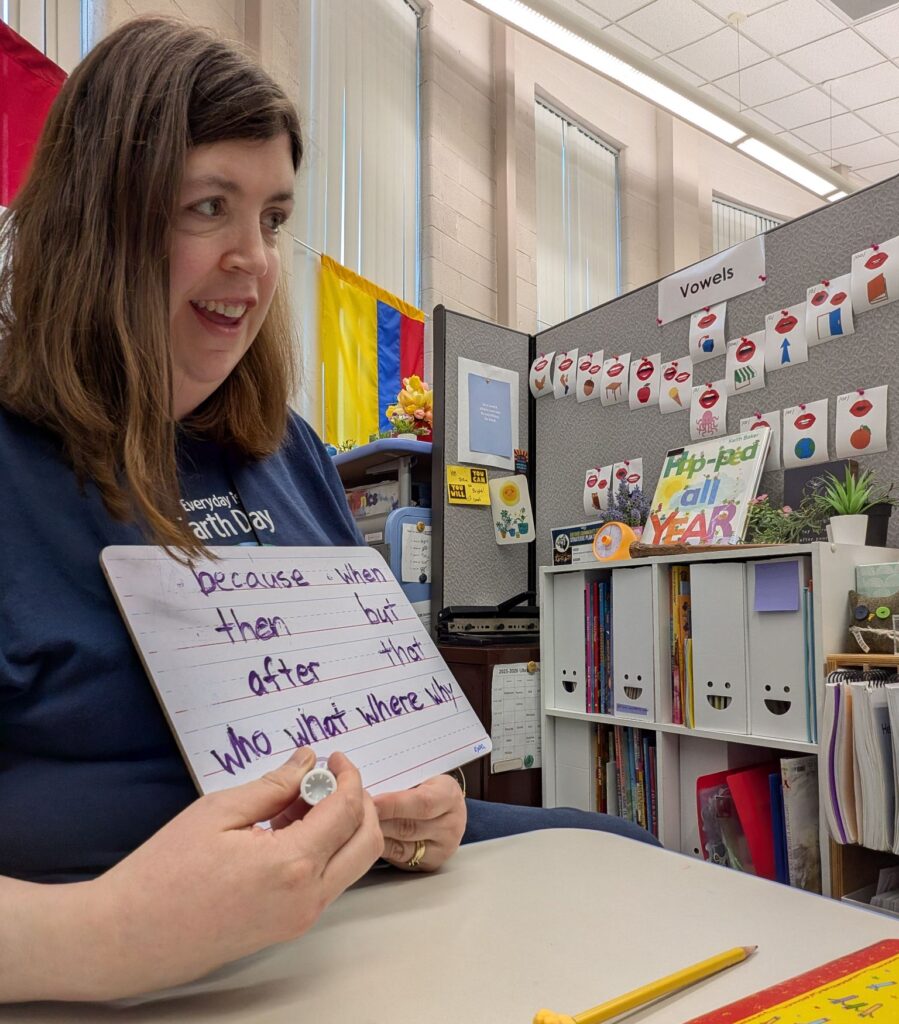
Inspired by a love of languages, culture, and connecting with students, Colleen transitioned from 15 years as a high school testing coordinator into teaching multilingual learners. Now supporting K–5 students at Oxford Community Schools, she brings joy to literacy instruction while helping students build confidence, curiosity, and a lifelong love of learning.
Conference
MDE Teaching Certificates and Endorsement Areas Types of Teaching Certificates Wondering what type of teaching certificate you’ll earn—or what options might be available to you in the future? Michigan offers several types of teaching certificates, and each one has specific requirements, such as coursework, testing, professional development, and teaching experience and it’s important that you understand the unique requirements for the specifiic type of certification you will earn. The Michigan Department of Education (MDE) shares official, detailed information about all certification pathways through its Educator Certification and Educator Services resources, so you can understand what’s required and plan your next steps with confidence. Please see below for a summary of each type of teacher certificate, and then dive into the MDE resources for more detailed information. MDE: Teaching Certificate Requirements Learn more >> Provisional Certificate Issued to individuals who have completed an approved teacher preparation program Requires passing the required subject-area tests Serves as an initial “standard” certificate before advancing to the Professional certificate Professional Education certificate A renewable certificate Earned after completing additional requirements such as: Teaching experience Professional development Additional coursework (as required by law) Interim Teaching Certificate In Michigan, the Interim Teaching Certificate is a temporary certificate that allows individuals to teach after passing the subject area test and while they work to complete their coursework. A temporary certificate issued to individuals in approved alternative route programs Allows individuals to teach while completing program coursework Requires: A bachelor’s degree with a 3.0 GPA or higher Acceptance into an approved alternative route provider Required pre-service coursework and/or field-based experiences Passing the required MTTC subject-area test(s) Valid for up to five years To transition from an Interim to a Standard Teaching Certificate, teacher candidates must: Successfully complete the entire alternative route program. Complete three years of successful teaching within their endorsement area(s). Standard / Provisional Teaching Certificate The Standard or Provisional Teaching Certificate is the typical initial credential for Michigan teachers. Requirements typically include: Completing an approved teacher preparation program Completing clinical experience/student teaching Passing the required MTTC exams Features: Serves as the initial standard teaching license Leads toward the Professional Education Certificate, a renewable advanced credential Valid for up to five years, renewable through continuing education Allows teaching in the endorsement area(s) for which the approved program and tests were completed Standard Teaching Certificate Issued to individuals who have completed an approved teacher preparation program and passed required subject-area tests Considered the regular, renewable teaching certificate Authorizes teaching in the endorsement area(s) of the candidate’s approved program Renewable every five years with completed continuing education Additional Endorsements Endorsements can be added to an existing certificate Allow teachers to teach new subject areas or different grade levels Requirements vary by endorsement Endorsement Areas What is a teaching endorsement? A teaching endorsement explains what subject(s) and grade levels you are allowed to teach in Michigan. Your endorsement is based on your education, training, and required tests. Check your teaching certificate Your Michigan teaching certificate lists one or more endorsement codes (short letter codes like EX or LX). These codes show the subjects and grade levels you are qualified to teach. Use the Michigan Department of Education (MDE) website The Michigan Department of Education (MDE) provides official, detailed information about all teaching endorsements. On the MDE website, look for information for guidance on courses that can be taught. You can match the endorsement code(s) on your certificate with MDE’s descriptions to see exactly what each endorsement allows you to teach. Understand grade-level ranges Each endorsement is tied to a specific grade range, such as: Elementary: K–5 or K–8 Secondary: 6–12 All Grades: K–12 (varies by subject) The grade range tells you which students you are authorized to teach. Need help? If you still have questions, you can contact the Office of Educator Excellence at the Michigan Department of Education. Share your endorsement code(s) and your question, and they can give you a clear answer about what your certification allows you to teach. MDE: Courses That Can Be Taught Learn more >> Table of Contents
The Power of Mentorship in Teaching Apprenticeships

The Power of Mentorship in Teaching Apprenticeships A Partnership for Success Translating preparation program coursework into real, responsive teaching takes more than theory; it requires guidance, reflection, and support within the classroom. That’s where mentorship makes the difference. Mentor Teachers open their classrooms, demonstrate best practices, and model what effective teaching looks like in action. In turn, Apprentice Teachers gain hands-on classroom experience, helping them build confidence, refine their practice, and enter the profession better prepared to stay. Together, they create a collaborative learning environment where growth happens for educators and students. Why Mentorship Matters Mentor teachers are a key requirement for a Michigan Registered Apprenticeship Program. Mentor Teachers play a vital role in guiding Apprentice Teacher Candidates through on-the-job learning. They demonstrate essential teaching practices, including effective classroom management and the use of high-quality instructional materials. In Talent Together’s Teacher Candidate Survey, an overwhelming 95% of Apprentice Teacher Candidates reported feeling supported by their Mentor Teacher in successfully fulfilling their teaching responsibilities. Additionally, 94% agreed that their Mentor Teacher provides them with valuable, high-quality feedback they can apply in the classroom. During Talent Together’s year-long Registered Apprenticeship Program, Teacher Candidates are placed in the classroom working alongside a Mentor Teacher. Talent Together Apprentice Teacher Liz Chapman at Kalamazoo Public Schools shares this about her experience, “Being in the classroom for the entire school year allows me the opportunity to observe a more genuine picture of teaching. I have time to grow and change with the students and the curriculum, developing more fully as a teacher. The insight my mentor offers into the thought process of a successful teacher is incredibly valuable.” A look into Talent Together Mentor and Apprentice Teacher Pairs Mentor Teacher Diana Mickles and Apprentice Teacher Jasmine Jarmon Mentor Teacher Diana Mickles and Apprentice Teacher Jasmine Jarmon are demonstrating the power of mentorship at Ferndale Public Schools. For Jasmine, this apprenticeship marked a meaningful step outside her comfort zone. After years of working in one-on-one intervention teaching, starting to teach a full classroom was a new experience, but one that helped her grow in confidence and patience. With the guidance of her Mentor Teacher, she learned how to balance meeting individual student needs while leading whole-class instruction, preparing her to take on a classroom of her own confidently. For her Mentor Teacher, Diana, the experience reinforced the power of collaboration. Having Jasmine in the classroom allowed for shared lesson planning, co-teaching, and real-time problem solving. Mentor Teacher Diana shares, “Through Talent Together’s mentor professional learning and reflective conversations with other mentors, I have become even more intentional in my instructional choices and modeling my thinking for future educators.” Mentor Teacher Roxann Smith and Apprentice Teacher Lucy Rangel De Jackson In a Special Education classroom at Traverse City Area Public Schools, Mentor Teacher Roxann Smith and Apprentice Teacher Lucy Rangel De Jackson demonstrate the power of mentorship in practice. Lucy shares, “I’ve learned that flexibility is my greatest tool. This journey has shaped me into a creative problem-solver. I’ve learned to adapt my environment and my expectations in real-time to meet students where they are.” This mentorship has strengthened both Lucy and Roxann by emphasizing adaptability and collaboration. Lucy has grown more confident in adjusting instruction, supporting diverse learners, and contributing as a full member of the teaching team. For Roxann, mentoring has sharpened her practice by making her instructional decisions more intentional and reinforcing the value of shared resilience in Special Education classrooms. “To be a mentor, I had to re-learn how to articulate the why behind every split-second decision I make. I can no longer just ‘know’ how to de-escalate a situation; I have to be able to explain the behavioral theory and the sensory needs behind it to Lucy. This journey has made me a more precise educator and a more thoughtful communicator with parents and specialists,” shares Mentor Teacher Roxann. Mentor Teacher Sean LaForge and Apprentice Teacher Michelle Harrington At Roseville Community Schools, Mentor Teacher Sean LaForge and Apprentice Teacher Michelle Harrington focus on student engagement through differentiated activities that increase participation. Michelle shares, “ I have found that students are most engaged when we are using an active teaching strategy where they are up out of their seats and moving around into different stations or activities. I will definitely be using this strategy in my own classroom in the future.” This energetic teaching pair works together to set clear expectations for their students in a relaxed atmosphere. They work hard to form bonds with students and take time to learn each personality in their classroom. “There is a certain level of experience you can get from being a sub, but actually being in a teaching position full-time with the same students each day is transforming me as a teacher. It really is helpful when encountering difficult situations to have someone right there with you to provide guidance or advice,” shares Michelle. Mentor Teacher Sean shared that he is pleased with the positive impact Michelle is making in his classroom. “Mentoring has pushed me to verbalize and reflect on my own teaching strategies. That process has strengthened my practice and made me a better teacher as well.” Honoring Mentors and Apprentices We are incredibly grateful for all the Mentor Teachers who have partnered with Talent Together across our last three cohorts. Their time, expertise, and care are invaluable. We also celebrate our Apprentices, who are stepping confidently into the teaching profession, learning from their Mentor Teachers, and shaping the future of education. Talent Together remains committed to mentorship-driven preparation, ensuring every new teacher has the guidance and support needed to succeed. Learn more about being a Mentor Teacher with Talent Together! Kriha, N., George, D., Feinstein, J., & Skubel, A. (2025, October). Building futures: Strengthening the educator workforce through teacher apprenticeships (RTAP National Report). The Education Trust & Tennessee Educators of Color Alliance. https://edtrust.org/wp-content/uploads/2025/10/RTAP-National-Report-Final.pdf
Program addresses Michigan’s teacher shortage by recruiting from the community
Program addresses Michigan’s teacher shortage by recruiting from the community By Dee Morrison, WGVU News A statewide non-profit organization is tapping coaches, bus drivers, or lunchroom attendants for a unique training program Talent Together operates what leaders call a “grow your own” program to address the state’s teacher shortage. Executive Director Dr. Sarena Shivers explains. “We are looking for potential teachers right in the communities that they currently serve. They may already be a bus driver, maybe they are a parent, maybe they’re a teacher’s assistant. In some capacity, they are already serving in that community, and what we do is help them find their way to the teacher classroom certification by matching them with a postsecondary institution.” Classes are virtual, allowing candidates to receive post-secondary education while living and working in their own community. The program also includes a year-long apprenticeship with a master teacher. “One more thing that makes our program unique is that we are partnered and recognized as an apprentice program through the US Department of Labor, and our Teacher Candidates receive 80% of a teacher’s salary in full benefits during that apprenticeship year.” Talent Together is led by all 56 intermediate school districts and regional education service agencies in Michigan so is available statewide. Since its launch in 2022, it has placed 218 teachers and another 137 will join the teacher workforce at the end of this school year. Talent Together received 1,703 applications for its 4th cohort. Listen to the full conversation here
Types of Teaching Certification
MDE Teaching Certificates and Endorsement Areas Types of Teaching Certificates Wondering what type of teaching certificate you’ll earn—or what options might be available to you in the future? Michigan offers several types of teaching certificates, and each one has specific requirements, such as coursework, testing, professional development, and teaching experience and it’s important that you understand the unique requirements for the specifiic type of certification you will earn. The Michigan Department of Education (MDE) shares official, detailed information about all certification pathways through its Educator Certification and Educator Services resources, so you can understand what’s required and plan your next steps with confidence. Please see below for a summary of each type of teacher certificate, and then dive into the MDE resources for more detailed information. MDE: Teaching Certificate Requirements Learn more >> Provisional Certificate Issued to individuals who have completed an approved teacher preparation program Requires passing the required subject-area tests Serves as an initial “standard” certificate before advancing to the Professional certificate Professional Education certificate A renewable certificate Earned after completing additional requirements such as: Teaching experience Professional development Additional coursework (as required by law) Interim Teaching Certificate In Michigan, the Interim Teaching Certificate is a temporary certificate that allows individuals to teach after passing the subject area test and while they work to complete their coursework. A temporary certificate issued to individuals in approved alternative route programs Allows individuals to teach while completing program coursework Requires: A bachelor’s degree with a 3.0 GPA or higher Acceptance into an approved alternative route provider Required pre-service coursework and/or field-based experiences Passing the required MTTC subject-area test(s) Valid for up to five years To transition from an Interim to a Standard Teaching Certificate, teacher candidates must: Successfully complete the entire alternative route program. Complete three years of successful teaching within their endorsement area(s). Standard / Provisional Teaching Certificate The Standard or Provisional Teaching Certificate is the typical initial credential for Michigan teachers. Requirements typically include: Completing an approved teacher preparation program Completing clinical experience/student teaching Passing the required MTTC exams Features: Serves as the initial standard teaching license Leads toward the Professional Education Certificate, a renewable advanced credential Valid for up to five years, renewable through continuing education Allows teaching in the endorsement area(s) for which the approved program and tests were completed Standard Teaching Certificate Issued to individuals who have completed an approved teacher preparation program and passed required subject-area tests Considered the regular, renewable teaching certificate Authorizes teaching in the endorsement area(s) of the candidate’s approved program Renewable every five years with completed continuing education Additional Endorsements Endorsements can be added to an existing certificate Allow teachers to teach new subject areas or different grade levels Requirements vary by endorsement Endorsement Areas What is a teaching endorsement? A teaching endorsement explains what subject(s) and grade levels you are allowed to teach in Michigan. Your endorsement is based on your education, training, and required tests. Check your teaching certificate Your Michigan teaching certificate lists one or more endorsement codes (short letter codes like EX or LX). These codes show the subjects and grade levels you are qualified to teach. Use the Michigan Department of Education (MDE) website The Michigan Department of Education (MDE) provides official, detailed information about all teaching endorsements. On the MDE website, look for information for guidance on courses that can be taught. You can match the endorsement code(s) on your certificate with MDE’s descriptions to see exactly what each endorsement allows you to teach. Understand grade-level ranges Each endorsement is tied to a specific grade range, such as: Elementary: K–5 or K–8 Secondary: 6–12 All Grades: K–12 (varies by subject) The grade range tells you which students you are authorized to teach. Need help? If you still have questions, you can contact the Office of Educator Excellence at the Michigan Department of Education. Share your endorsement code(s) and your question, and they can give you a clear answer about what your certification allows you to teach. MDE: Courses That Can Be Taught Learn more >> Table of Contents